Understanding Couplers in Construction and Piping Systems
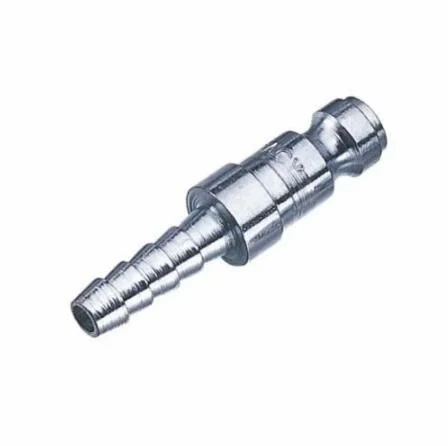
Couplers are essential mechanical components designed to connect pipes, tubes, hoses, or structural elements, available in various types, materials, and connection methods. These crucial devices allow for secure joining of components while often permitting quick assembly and disassembly. From pipe couplings and scaffold couplers to hydraulic fittings and rebar connectors, couplers serve critical functions in construction, plumbing, industrial systems, and more. This comprehensive guide explores coupler types, materials, sizing considerations, installation methods, and their diverse applications across industries.
Coupler Key Specifications
Proper coupler selection requires understanding these critical parameters that determine performance in various applications.
| Specification | Description | Considerations |
|---|---|---|
| Connection Type | Threaded, flanged, grooved, compression, quick-disconnect, etc. | Determines installation method and joint integrity |
| Size Range | Diameter compatibility (typically 1/8" to 12" or more) | Must match connecting components for proper fit |
| Pressure Rating | Maximum working pressure (PSI) at specified temperatures | Must exceed system requirements with safety margin |
| Temperature Range | Minimum and maximum operating temperatures | Must accommodate system temperature variations |
| Material Compatibility | Compatible with specific fluids or environmental conditions | Prevents corrosion and material degradation |
| Load Capacity | Maximum axial, radial, and moment loads (for structural couplers) | Critical for structural integrity in construction applications |
| Movement Accommodation | Flexible, rigid, or expansion capabilities | Important for systems with vibration or thermal movement |
| Installation Method | Welded, screwed, clamped, or push-to-connect | Affects assembly time and required tools/skills |
Coupler Installation & Maintenance
Proper installation and maintenance practices ensure couplers perform reliably throughout their service life.
Proper Alignment
Ensure components are properly aligned before connecting to prevent stress on the coupler.
- Warning: Misalignment causes premature failure
- Tip: Use alignment tools for precision connections
Torque Specifications
Follow manufacturer's torque specifications for threaded or bolted connections.
- Action: Use calibrated torque wrench for accuracy
- Tip: Lubricate threads unless specified otherwise
Pressure Testing
Test systems after installation to verify integrity of all connections.
- Warning: Follow all safety protocols for pressure testing
- Solution: Test to 1.5x design pressure when possible
Regular Inspection
Check for leaks, corrosion, wear, or mechanical damage during routine maintenance.
- Frequency: Quarterly for most systems, more often for critical applications
- Check for: Cracks, deformation, or seal deterioration
Corrosion Protection
Apply appropriate coatings or cathodic protection for couplers in corrosive environments.
- Benefit: Extends service life in harsh conditions
- Safety First: Ensure compatibility with system media
Replacement Schedule
Replace wear components like seals and gaskets according to manufacturer recommendations.
- Action: Keep spare seals/gaskets for critical systems
- Note: Document replacement dates for maintenance tracking
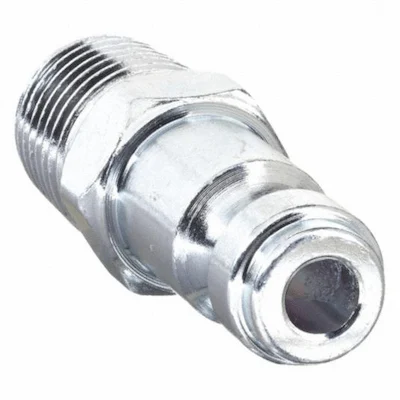
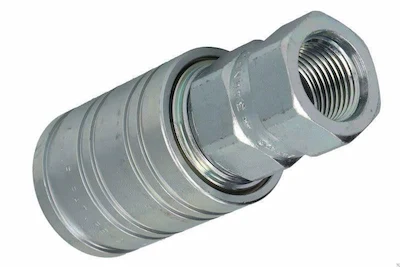
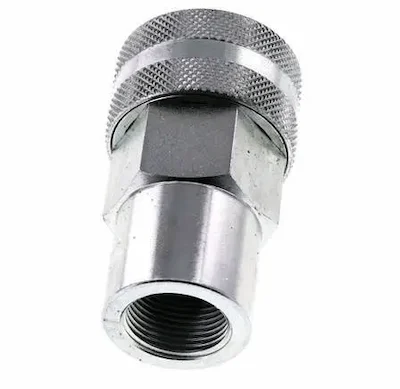
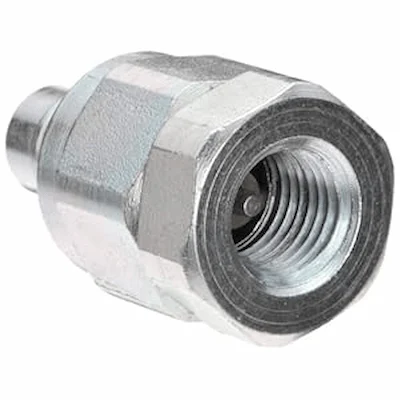
Coupler Display
Common Coupler Applications